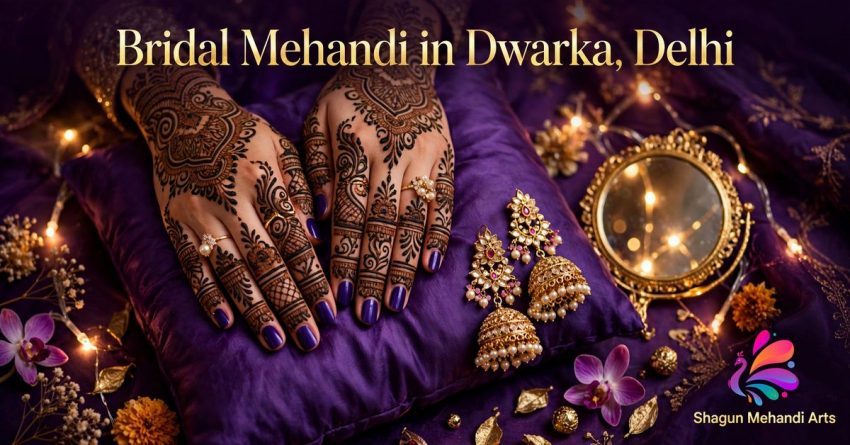
There is a particular kind of calm that Dwarka brides describe when their mehandi day goes right. The artist arrives at the flat in Sector 10 or the house near Vegas Mall in the morning, the family settles in with chai, and over the next few hours, both hands and feet turn into something beautiful — without the bride ever having to leave home. If you are hunting for the best bridal mehandi artist in Dwarka, that doorstep experience is exactly what you should be looking for.
Dwarka is one of Delhi’s biggest wedding belts. Between the residential sectors, the farmhouses on the outskirts, and the banquet halls that fill up through the November to February season, bridal mehandi artists who work here stay busy. But “busy” does not automatically mean “good.” Plenty of brides have learned the hard way that a famous Instagram page is no guarantee of clean lines, safe paste, or showing up on time. So let us talk honestly about what separates a great bridal artist from an average one — and how to book right for your Dwarka wedding.
What a great bridal artist does differently
An average artist draws a design. A great bridal artist manages the entire mehandi experience. The difference shows up in small things long before the first cone touches your hand. A great artist asks about your wedding outfit and jewellery before suggesting designs, because mehandi should complement what you are wearing, not compete with it. They ask about your functions — is there a big mehndi ceremony, or a quiet family gathering? They give you an honest time estimate instead of a vague “ho jayega.”
Then there is the work itself. Watch for symmetry between both hands — this is where average artists slip. Bridal mehandi is essentially a mirror-image art form, and keeping both sides balanced over five or six hours of continuous drawing takes real skill and stamina. Look at the fineness of the lines in the artist’s previous work: are the paisleys crisp, the jaali work even, the fillings neat? Zoom into portfolio photos rather than admiring them from a distance.
Paste quality is the other great divider. Natural henna paste, mixed fresh with quality henna powder and essential oils, stains deep and is kind to skin. Cheap instant pastes — especially the ones promising black colour in an hour — can cause rashes and blistering. A great artist is proud of their paste recipe and will tell you exactly what is in it. An average one changes the subject.
The home-service advantage for Dwarka weddings
Dwarka’s layout makes home service almost a necessity rather than a luxury. The sub-city is huge — getting from Sector 22 to Sector 6 can eat up a real chunk of the day, and that is before you factor in wedding-season traffic near the malls and metro stations. When the artist comes to you, the logistics problem disappears entirely.
Home service also changes the emotional texture of mehandi day. Instead of sitting in a salon chair under fluorescent lights, the bride is in her own living room, wearing comfortable clothes, with her mother beside her and music of her choice playing. The session becomes part of the celebration rather than an errand. For brides having their mehandi at a farmhouse venue or a relative’s larger house — common in Dwarka weddings — the artist simply travels to wherever the family has gathered.
A professional home visit should need nothing from you except a comfortable place to sit. The artist brings fresh cones, seating arrangements, and good portable lighting for detail work. They should also brief you at the start on the plan: how long it will take, when breaks happen, and how the drying and aftercare will work. If your artist arrives and immediately starts drawing without a word of planning, consider it a yellow flag.
Bridal design families: find your style
Before you book, it helps to know which design family speaks to you. A versatile bridal mehandi artist in Dwarka should handle all of these comfortably:
- Traditional bridal: The full classic — dense symmetrical patterns, dulha-dulhan figures, baraat scenes, peacocks, jaali and paisley work covering hands to elbows and feet upward. Timeless, and still the most requested style for big Delhi weddings.
- Arabic bridal: Flowing trails of bold motifs with open space between them. Less dense than traditional work but dramatic in photographs. A good middle ground for brides who want bridal-scale mehandi without the heaviness.
- Portrait mehandi: The couple’s faces rendered in henna, usually with names and the wedding date woven in. This is specialist work — always ask to see the artist’s previous portraits specifically before committing.
- Minimal and contemporary: Fine lines, delicate bands, negative space, small meaningful motifs. Perfect for intimate weddings, court marriages, or brides whose personal style is understated.
- Fusion bridal: Traditional density on the hands with lighter, modern work on the arms — or vice versa. Many Dwarka brides choose this when they want the bridal feel with a personal twist.
The right artist will not just show you a catalogue and ask you to pick. They will look at your lehenga, ask about your jewellery, and suggest which style will actually photograph well with your overall look. That consultative approach is one of the clearest signs you are dealing with a professional.
Family bookings: mehandi for everyone
In most Dwarka weddings, the bride is not the only one getting mehandi. Mothers, sisters, cousins, aunts, close friends — the list grows quickly. Planning this as one coordinated booking is far smarter than arranging it piecemeal.
When you enquire, give the artist a realistic headcount. A single artist can handle the bride plus a handful of family members over the day, but for larger groups they should bring an assistant so that nobody is sitting around waiting for hours. Family designs are typically simpler — elegant backhand patterns, wrist bands, foot accents — and take a fraction of the time of full bridal work.
One tip families often miss: decide the order in advance. The bride goes first, always — her work takes the longest and needs the freshest paste and the artist’s freshest concentration. Elders who want simpler designs can be scheduled in parallel with an assistant. Discuss the sequence when you book, not on the morning of the function.
Booking smart for the November to February season
This is the part brides underestimate most. The November to February wedding season in Delhi NCR is intense, and genuinely good bridal mehandi artists get committed to the popular dates well in advance. Weekend dates in November and December are the first to go. If your wedding falls in this window, start your artist search the moment your date is fixed — not a month before.
When you reach out, have your details ready: the wedding date, the mehandi date you are planning (ideally two days before the wedding, so the colour peaks on the wedding day), your sector or venue location in Dwarka, the coverage you want, and the family headcount. Clear information gets you a clear quote and a confirmed slot faster.
Get the practical terms confirmed in writing — arrival time, expected duration, the plan if the session extends, and whether touch-ups are included. And ask about the artist’s backup plan. What happens if they fall ill on your date? A professional has an answer; an amateur has an awkward silence. For a Dwarka bridal mehandi booking in peak season, this kind of professionalism is what you are really paying for.
Aftercare: protecting your colour
Beautiful mehandi is a partnership — the artist does their part, and you do yours in the 24 to 48 hours after the paste comes off. The stain keeps deepening during this window, and your aftercare decides how rich it gets:
- Leave the paste on as long as you can. Eight hours minimum; overnight is the gold standard. The longer natural henna sits on skin, the deeper the colour.
- Scrape it off, don’t wash it off. Use the back of a spoon or just your fingers. Keep water away from the design for as long as practically possible afterward.
- Use warmth. The traditional method of warming hands over clove steam genuinely helps the stain develop.
- Seal with oil. A thin layer of mustard or coconut oil before any necessary contact with water protects the developing stain.
- Avoid beauty treatments on the area. Waxing, bleach or strong soaps near the design will fade it quickly — schedule parlour visits around your mehandi, not through it.
Your artist should explain all of this before leaving. Consider it part of the service, not a bonus.
Frequently asked questions
How far in advance should I book a bridal mehandi artist in Dwarka?
For November to February weddings, book as soon as your date is fixed — peak-season weekend slots fill weeks ahead. Off-season, three to four weeks of lead time is usually comfortable.
How long does full bridal mehandi take?
Complete bridal coverage — both hands to the elbows plus feet — typically takes four to seven hours depending on design density. Traditional full work takes longest; Arabic and minimal styles are quicker. Keep the bride’s seating comfortable and plan the day around it.
Is the henna paste safe for sensitive skin?
Natural henna paste made from real henna powder and essential oils is generally safe, but everyone’s skin is different. Always ask what is in the paste, avoid instant black chemical cones, and do a trial patch a few weeks before the wedding if your skin is sensitive.
Can the artist cover my whole family’s mehandi in one visit?
Yes — most bridal artists take family bookings alongside the bride. Share the headcount when booking so the artist can bring an assistant for larger groups. The bride’s work comes first, with family members scheduled around it.
When should I get my bridal mehandi done before the wedding?
Two days before the wedding is ideal. Bridal mehandi colour deepens over 24 to 48 hours, so mehandi done two days prior reaches its richest tone right on the wedding day. Avoid doing it the same day as the wedding — there is no buffer for drying or touch-ups.
At the end of the day, finding the best bridal mehandi artist in Dwarka, Delhi comes down to a few honest checks: fresh natural paste, a portfolio of real full-coverage bridal work, a trial if your skin needs one, clear communication about timing and terms, and an artist who comes to your door and treats your home like their studio. Book early in the season, plan for the colour to bloom over two days, and walk into your wedding with hands that tell your story.
For the full picture across the region, read our complete 2026 guide to the best bridal mehandi artist in Delhi NCR.