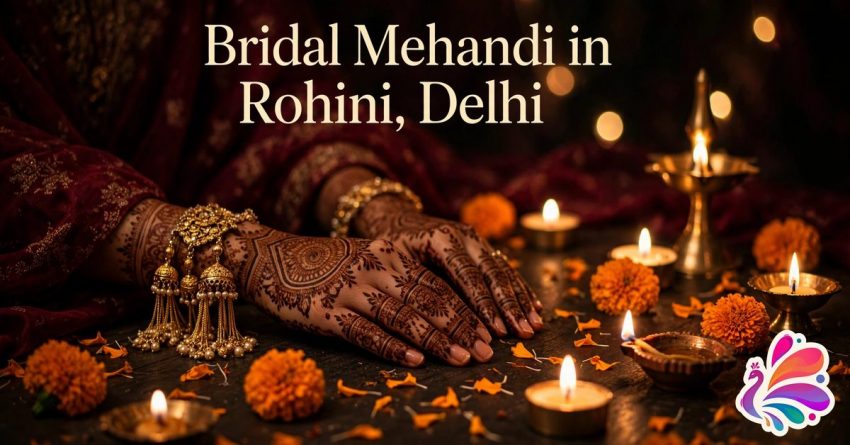
Ask any bride in Rohini where her mehandi happened and she will probably smile and say — at home, in the living room, with the whole family crowded around. That is how it works in this part of Delhi. The wedding week is already a marathon of functions, and nobody wants to drag the bride across the city for her bridal mehandi. What she really wants is a best bridal mehandi artist in Rohini who comes to her door, sets up comfortably at home, and stays until every last paisley is perfect.
Rohini has changed so much over the years. Sectors 7, 11, 13, the Avantika side, the residential pockets near the Japanese Park — it is a proper wedding zone now, with banquets and marriage halls filling up through the whole November to February season. And with that comes a very practical question for brides here: do you book a big-name artist from South Delhi and hope they reach on time, or do you find someone who already works this side of the city, knows the traffic, and treats your home as the studio? For most Rohini families, the answer is obvious. Let us walk through how to pick right.
Why a local artist makes the wedding week easier
A bridal mehandi session is not a two-hour job. Full bridal work — both hands from fingertips to elbows, feet, the works — takes anywhere from four to seven hours depending on the design. When the artist is coming from your own neighbourhood, the morning starts calmly. There is no anxious phone call about being stuck on the Outer Ring Road, no traffic from the other side of Delhi eating into your mehndi function’s schedule.
Artists who serve Rohini regularly also understand the rhythm of homes here. They know the mehandi usually happens in a flat in Sector 11 or a builder floor near Avantika, with aunties supervising the snacks and cousins hovering with cameras. You sit down in your own home, in your own comfortable clothes, and the hours pass with family around you. That comfort shows in the work: a relaxed bride means steadier hands from the artist and cleaner lines.
Not every artist who says “home service” means the same thing, so it is worth knowing what a proper bridal home visit looks like. The artist should arrive with everything: fresh henna paste mixed that morning or the previous evening, applicator cones, tissue, and a plan for where you will sit for the next several hours. Comfortable seating matters more than brides expect — you will be in one position for a long time, and back support plus good natural light make a genuine difference to the fineness of the work.
A professional will also manage the drying process with you. Bridal mehandi needs to stay on the skin for a good long while — most experienced artists recommend keeping it on for at least six to eight hours, and overnight if you can manage it. There is a lot of folklore around mehandi colour — cloves, heat, mustard oil — and an honest artist will separate what genuinely helps from what is just tradition.
One practical Rohini-specific point: if your wedding is in peak season, schedule the mehandi for a day with a genuine buffer before the wedding. Bridal mehandi colour deepens over 24 to 48 hours, reaching its richest tone on the second day. Booking it just a few hours before the baraat is a common mistake. Most brides here do it two days before the wedding — comfortable, unhurried, and the colour peaks exactly when the cameras come out.
Bridal design options worth discussing with your artist
Every bride has a different relationship with her mehandi. Some want the full traditional story told across both arms; others want something lighter and more modern. When you are shortlisting a bridal mehandi artist in Rohini, look at how comfortably they move between these design families:
- Traditional full bridal: Dense, symmetrical work covering hands to elbows and feet to mid-calf. This is the classic choice for brides who want the full bridal look, and it takes the longest — plan for a full day.
- Arabic-inspired bridal: Bolder trails, larger motifs, more breathing space between patterns. Brides who find traditional work too heavy often love this — it photographs beautifully and feels contemporary.
- Portrait mehandi: The couple’s faces woven into the design, often with the wedding date. This needs a genuinely skilled hand — ask to see previous portrait work specifically, not just the artist’s general portfolio.
- Minimal and modern: Fine-line work, negative space, delicate bands and motifs. Increasingly popular with Rohini brides having smaller, intimate functions or court weddings followed by a reception.
A versatile artist will not push one style on everyone. They will ask about your outfit, your jewellery, the scale of your functions, and then suggest what will actually suit you. That conversation itself tells you a lot — an artist who listens before drawing is almost always a better bet than one who shows you three designs and says pick one.
How to vet an artist before you book
The mehandi market has a wide range, and price alone tells you very little. Here is what actually matters when you are evaluating options:
Ask about the paste
This is the single most important question. Natural henna paste — made from real henna powder with essential oils like eucalyptus or clove — gives a deep, safe stain. Chemical-laden “instant” black pastes can give a darker immediate result but carry a real risk of skin reactions, sometimes severe. Any artist worth booking will be transparent about what goes into their cones. If someone is vague about ingredients or promises jet-black colour in an hour, walk away. Your skin on your wedding week is not the place for experiments.
Look at real bridal work, not just close-ups
Portfolios are usually full of beautiful close-up shots. Ask to see full-hand and full-arm pictures from real brides — that is where consistency shows. Look at both hands together: is the symmetry good? Are the lines clean all the way to the elbow, or does the quality drop where the camera usually stops looking? An experienced bridal mehandi artist for Rohini weddings will have plenty of full-coverage work to show.
Do a trial if you are particular
A trial is a small patch of design done a few weeks before the wedding. It answers two questions at once: do you love the artist’s style on your own skin, and does your skin react well to the paste? Brides with sensitive skin should never skip this.
Check reviews and references
Ask for references from recent brides in nearby sectors. Local word-of-mouth in Rohini is strong — someone in your society or family circle has almost certainly booked bridal mehandi recently.
Booking timeline for the wedding season rush
November to February is the madness period. Good bridal artists in Delhi NCR get booked out weeks, sometimes months, ahead for the peak wedding dates — especially the popular weekend dates in November and December. The practical advice is simple: once your wedding date is fixed, shortlist your mehandi artist within the next couple of weeks.
When you enquire, be ready with your date, your location in Rohini, the coverage you want (hands only, or hands plus feet), and whether family members also want mehandi. Many families bundle the bride’s bridal mehandi with simpler designs for mothers, sisters and cousins — it is efficient, and group bookings often work out better for everyone. Just confirm the artist can bring an assistant for large family groups, so nobody is waiting for hours.
Aftercare that genuinely deepens the colour
The artist’s work ends when the paste comes off, but your colour keeps developing for another day or two:
- Keep the paste on long. Six to eight hours minimum; overnight is ideal. The longer natural henna stays in contact with skin, the deeper the stain.
- Scrape, don’t wash. Remove dried paste by gently scraping it off, not with water. Avoid water on the design for as long as you reasonably can after removal.
- Warmth helps. Keeping your hands warm after paste removal — the traditional clove-steam method — genuinely aids colour development.
- Oil the design. A light layer of mustard or coconut oil before any unavoidable water contact protects the stain in its early hours.
- Skip the parlour. Avoid waxing, bleaching or facials on the mehandi areas close to the wedding — these strip the stain fast.
A good artist will walk you through all of this at the end of the session. If yours just packs up and leaves, that is a sign worth noting for your recommendation to the next bride.
Frequently asked questions
How much time does full bridal mehandi take?
For complete bridal coverage — both hands to the elbows and both feet — expect four to seven hours depending on the design’s density. Traditional full-coverage work takes the longest; minimal modern designs are quicker.
When should I book my bridal mehandi artist in Rohini?
For November to February weddings, book as soon as your date is fixed — good artists fill their peak-season slots weeks ahead. Off-season weddings give you more flexibility, but even then, booking three to four weeks early is sensible.
Is home-service bridal mehandi hygienic and safe?
Yes, when the artist uses fresh natural henna paste and clean applicators. Ask what goes into the paste and avoid instant black chemical cones. A trial patch a few weeks before the wedding is the surest way to confirm your skin is happy with the paste.
Can the artist do mehandi for my family members too?
Most bridal artists happily take family bookings alongside the bride — mothers, sisters, cousins and friends. Mention the headcount when booking so the artist can bring an assistant and plan the timing. Family designs are usually simpler and quicker than full bridal work.
How do I get the darkest possible mehandi colour?
Three things matter most: natural, fresh henna paste; long contact time (overnight if possible); and proper aftercare — scraping rather than washing, warmth, and oiling the design. Your individual skin chemistry plays a role too, which is why a trial gives you the most honest preview.
Your bridal mehandi is one of the few wedding details that is truly, literally in your hands — in every photograph, every ritual, every blessing. Choosing the best bridal mehandi artist in Rohini, Delhi is not about finding the most famous name; it is about finding a skilled, honest artist who comes to your home, understands your style, uses safe natural paste, and treats your wedding week with the seriousness it deserves. Book early, do the trial, and give your mehandi the two days it needs to bloom into its deepest colour. The rest of the wedding will take care of itself.
For the full picture across the region, read our complete 2026 guide to the best bridal mehandi artist in Delhi NCR.