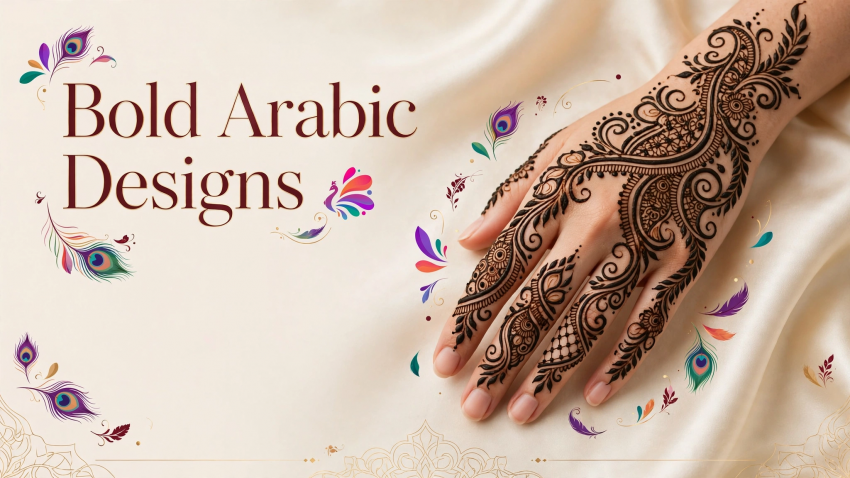
There is a reason Arabic mehandi has taken over wedding feeds across Delhi. It is bold without being heavy, detailed without being crowded, and it photographs beautifully — which, let’s be honest, matters on your wedding day. If you have been scrolling through those sweeping floral vines and trailing paisley patterns and wondering how to get that look on your own hands, the answer is simple: you need an arabic mehandi artist who genuinely understands the style, not just someone who copies a picture off the internet.
Arabic mehandi is not about filling every inch of your hand with tiny work. It is about confidence — thick strokes, open spaces, big flowers. Here is everything worth knowing: what the style actually is, the motifs that define it, how it compares with traditional bridal mehandi, when it suits your functions, how to pick the right artist, and how to keep the colour deep and dark.
What Arabic Mehandi Style Actually Is
Arabic mehandi comes from the Gulf and Middle Eastern tradition, where women wore henna for celebrations but favoured a freer, more spacious look than the dense, all-over patterns of India. The philosophy is different. Where traditional bridal mehandi tries to cover the hand completely, Arabic mehandi lets your skin be part of the design. The empty spaces are not unfinished — they are the whole point. They make the bold strokes stand out.
Designs usually sit heavier on one side of the hand and trail outward — across the wrist, up the fingers, sometimes onto the forearm. One hand carries a grand floral piece while the other mirrors it loosely. There is a rhythm to it, almost like calligraphy, and when an artist has real practice in the style, you can see it in the flow.
Delhi brides have made Arabic mehandi their own — it is now one of the most requested styles for engagements, sangeet nights, and even weddings, perfect for brides who want striking hands without sitting through six hours of dense bridal work. Along the way it has picked up Indian touches too: lotus motifs and fine jaali work around the big florals.
The Motifs an Arabic Mehandi Artist Uses Most
Every experienced arabic mehandi artist works from a familiar family of motifs, then personalises them for your hand shape and the occasion. Knowing these helps you talk to your artist clearly instead of just saying “something pretty”.
- Large florals and roses: Big, open flowers with layered petals and bold outlines, usually placed on the back of the hand as the centrepiece.
- Trailing vines and leaves: Curving stems that sweep from the fingers across the wrist or up the arm, giving the design its movement and flowing, diagonal look.
- Paisleys and mango shapes: Bold paisleys with thick borders and shaded interiors, strung together in trails or clustered around a flower.
- Dots, shading, and fill work: Dots and gradient shading add depth — done well, they give the design a three-dimensional feel that flat linework cannot match.
- Finger detailing: Rings around each finger, little floral bands, or trailing lines from the main design onto the fingertips keep everything connected.
- Jaali and mesh accents: Light netted work in small patches, balancing the big bold shapes with a bit of texture.
Ask your artist to draw a rose and a vine for you before you book — in their own hand, not a saved photo. Confident line work tells you more than any gallery ever will.
Arabic vs Traditional Rajasthani Bridal Mehandi: Which Is Right for You?
This is the question brides ask most often, so let’s answer it properly. Neither style is “better” — they do different things, and plenty of brides now mix both across their wedding functions.
Coverage and density. Traditional Rajasthani and classic Indian bridal mehandi cover the hands and often the full arms, front and back, with dense work — dulha-dulhan figures, baraat scenes, fine peacocks and jaali. Arabic mehandi deliberately leaves skin visible. If you love the look of heavy, ornate hands, go traditional. If you want elegance with breathing room, Arabic is your style.
Time in the chair. A full traditional bridal set can take four to six hours or more. A beautiful Arabic bridal design usually takes one and a half to three hours. For brides juggling trials, family functions, and forty other things that week, that saving is genuinely significant.
Colour and contrast. Arabic designs use thicker lines and larger filled areas, so the stain often looks darker and more dramatic in photographs — especially against reds, maroons, and golds. Traditional dense work glows; Arabic pops.
Function fit. Arabic mehandi is perfect for engagements, sangeet, and cocktail nights, where you want stunning hands without the full bridal commitment. A good arabic mehandi artist will tell you honestly which style suits each of your functions — many brides choose traditional bridal for the wedding day itself and Arabic for the other functions.
One honest note: if elders in the family expect the classic full-hand bridal look, Arabic designs on the wedding day sometimes raise eyebrows. Have that conversation at home before you decide, not the night before the function.
Finding an arabic mehandi artist You Can Trust
Booking the right artist makes all the difference, because this style lives or dies on the artist’s confidence with a cone. Here is how to choose well.
Check their real portfolio, not just their feed. Look for close-ups showing line quality. Arabic style needs bold, steady strokes — if the florals look wobbly or the shading is patchy, keep looking. And ask to see Arabic work specifically, because excellence at dense traditional designs does not automatically transfer.
Talk about your outfit and jewellery. A good artist will ask what you are wearing and design around it. Arabic mehandi’s open spaces sit beautifully with heavy bangles and haathphool — the jewellery becomes part of the composition. If your artist suggests designs around your jewellery, that is a good sign.
Discuss timing honestly. Tell your artist which function the mehandi is for and when you need to be ready. Arabic mehandi needs a few hours to dry properly and ideally a full day for the colour to deepen, so schedule the appointment with that in mind.
Ask about the henna itself. Fresh, natural henna paste gives the deep, rich stain; old or chemical-laden cones give a weak result and can irritate skin. A trustworthy artist will happily tell you what goes into their paste — vagueness here is a red flag.
Do a trial if the occasion is big. For a wedding, a small trial a few weeks before shows you how the stain develops on your skin and whether the style matches what you imagined. It also takes the nerves out of the main day.
Aftercare: Getting That Deep, Dark Stain
The artist does half the work; the other half is yours. These aftercare habits decide whether your Arabic mehandi turns out a gorgeous deep maroon or fades to a disappointing light orange.
- Let it dry completely. Do not touch, smudge, or rush the drying. Arabic designs with their thick lines need a good two to three hours of undisturbed drying time.
- Keep the paste on for six to eight hours — overnight is even better. Longer paste time means a deeper stain.
- Avoid water for the first day. Once you scrape the dried paste off (never wash it off with water), keep your hands away from water for as long as possible — ideally 24 hours. This is the single biggest factor in colour depth.
- Ask your artist for the lemon-sugar seal. Dabbed over the drying paste, it helps the paste stick longer and deepens the colour.
- Warmth helps. Keeping your hands warm — some brides warm their hands gently near cloves’ smoke — encourages a darker stain. Avoid cold air on fresh mehandi.
- Moisturise after removal. Once the paste is off and the stain has set, a little mustard oil or coconut oil keeps the colour rich and stops it from drying out and flaking early.
One thing to skip: the black “instant” henna some street vendors offer. It is not real henna, it often contains harsh chemicals, and it can cause serious skin reactions.
Frequently Asked Questions
How long does Arabic mehandi take to apply?
For both hands up to the wrist, most Arabic designs take one to two hours. Trailing up to the elbows, plan for two to three. It is noticeably quicker than full traditional bridal work — one reason brides love it for pre-wedding functions.
Does Arabic mehandi give a dark colour?
Yes — with fresh natural henna and proper aftercare, Arabic mehandi develops a deep, rich colour. The bold, thick lines take the stain very well. Keep the paste on for six to eight hours, avoid water for a day afterwards, and the colour will be beautiful.
Is Arabic mehandi suitable for a bride’s wedding day?
Absolutely, and many modern brides choose it. It looks stunning in photographs and pairs beautifully with bridal jewellery. That said, some families expect the traditional full-coverage bridal look, so it is sensible to discuss it with your family first. A popular middle path is traditional bridal mehandi for the wedding and Arabic designs for the engagement or sangeet.
How much does an arabic mehandi artist charge in Delhi NCR?
Prices vary widely depending on the artist’s experience, the intricacy of the design, and how far up the arms or legs it goes. Simple Arabic designs for a function cost far less than elaborate bridal work. Rather than comparing on price alone, compare portfolios — with mehandi, you genuinely get what you pay for. Reach out through the website for a quote based on your specific design and occasion.
How far in advance should I book for a wedding?
For wedding season dates, booking two to four weeks ahead is wise, because good artists fill up fast. For a single function like an engagement or sangeet, a week or two of notice is usually enough. If your date falls during the peak wedding season, earlier is always safer.
Book Your Arabic Mehandi Appointment
Arabic mehandi is for the bride who knows what she wants — bold lines, beautiful open spaces, and designs that look like art. The right design will be in every photograph you treasure for years.
If you are looking for an arabic mehandi artist in Delhi NCR who treats every hand like a canvas, Shagun Mehandi Arts is ready when you are. Browse the designs, pick your favourites, and book your appointment through shagunmehandiarts.com — and walk into your function with hands that turn heads.