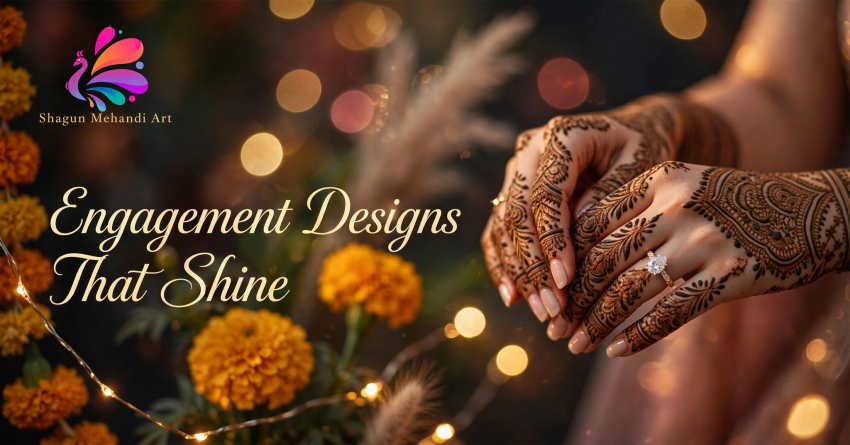
The engagement photos you take on your ring ceremony day will be the ones your family pulls out at every gathering for years. Long before the wedding album exists, these are the pictures that go on the wall and in the family WhatsApp group. So the mehandi on your hands has to do more than look pretty in person — it has to hold up on camera. Choosing the right engagement mehandi artist is really about finding someone who designs with the photograph in mind: contrast, placement, how the design frames your ring, and how the colour will deepen by the time the ceremony begins.
Why Engagement Mehandi Needs a Different Design Approach
Brides often assume the engagement mehandi should just be a smaller version of the bridal one. It shouldn’t. A wedding mehandi goes up to the elbows, covers both feet, and is meant to be dense and dramatic for a full day of rituals. Engagement mehandi lives in a tighter frame — the close-up of the ring exchange, the shot of your hands resting on his shoulder, the overhead photo of the thali with both your hands on it.
Those photos are taken within hours of each other, usually in indoor banquet halls or garden venues around Delhi NCR. The design has to read clearly in flash photography and in dim yellow hall lighting alike. Very fine work disappears in indoor shots; very heavy work looks muddy in flash. The sweet spot is a medium-weight design with clear outlines — crisp whether your photographer is shooting candid or posed.
Timing matters more here than for weddings. Bridal mehandi goes on the night before, sometimes two days before; engagement mehandi often goes on the same morning or the previous evening. A design that needs a full day to darken won’t photograph at its best if the ceremony is six hours after application. Plan your booking slot around your ceremony time, and ask upfront how long the stain takes to develop.
Design Styles That Look Stunning in Engagement Photos
Not every style photographs the same way. Here is what actually works on camera.
Arabic and trail designs. Flowing vines, leaves, and bold flowers that trail from wrist to fingertips photograph beautifully because they follow the hand’s natural lines. In the ring-exchange close-up — the most important shot of the evening — the design sweeps past the finger and draws the eye straight to the ring. Keep the fingers detailed rather than filled, so the ring still stands out.
Mandala and portrait styles. A mandala on the back of the hand is a classic: symmetrical, framing the fingers, and complete in a square crop. Portrait-style touches — tiny peacocks, lotus motifs, wedding bells near the wrist — add a personal feel that shows up nicely in the flat-lay shots photographers take of your hands with the ring box and shagun envelope.
Minimalist modern patterns. If your outfit is heavily embroidered and your jewellery is statement-level, a light, airy design photographs better than a dense one. Heavy zari plus heavy mehandi plus bold jewellery is a lot for one photograph. A minimal design with clean lines lets the outfit and the ring do the talking — especially with pastel lehengas, where a soft, open pattern beats a dark, packed one.
One thing to avoid: patchy, half-filled designs with no clear border. On camera — especially in group family photos taken from a few feet away — they read as smudged rather than artistic. If you want minimal, keep it geometric and deliberate, not random.
What an Engagement Mehandi Artist Does Differently for Ring Ceremonies
Anyone can draw a good design. An experienced engagement mehandi artist thinks about the day itself. Their first question is not “which design do you like” but “what time is your ceremony, and where” — because everything flows from the schedule: when the design goes on, how dark it will be by photo time, and how much of your hands and feet will actually show in your outfit.
The second difference is ring awareness. During the ring exchange, the lens is inches from the ring finger, so a professional designs around it — leaving the area clean or framing it with a small border — so the ring pops against the design instead of getting lost in it. They will also confirm which finger, because customs vary and that decides which hand gets the detailed work.
The third difference is pacing. Engagement functions run tight — the artist often has a two-to-three-hour window while you are getting hair and makeup done. A seasoned artist finishes both hands in that time without rushing, brings their own setup, and works alongside the makeup artist without getting in anyone’s way. Ask how long they take for a full engagement set; the answer separates a casual drawer from a true professional.
Hands, Feet, or Both? Placement Decisions for Photos
Almost every family debates this, so let’s settle it with how engagements are actually photographed. If your ceremony is indoors and the photographer is shooting mostly portraits and ring shots, the feet barely appear in the album. Go hands-only and put the time into a rich, detailed hand design instead of splitting it.
If you are wearing sandals or there is an outdoor component — a garden entry, a photo booth, couple portraits on the lawn — then feet matter. Most photographers do a dedicated “details” round: the ring, the hands on the outfit, the feet with the footwear. A simple trail design on the feet, not a full covering, is enough without adding an hour to your session.
Think about your most-photographed angles. The back of the hand shows in the ring exchange and most candids; the palm shows when you hold the shagun envelope, adjust your dupatta, or rest your hands on his. A good design balances both — a showpiece on the back, a slightly lighter pattern on the palm — so neither side looks unfinished when it turns up on camera.
Many engagements run from late afternoon into the evening, and flash starts being used around dusk. Designs with strong outlines hold up across that light change; whisper-thin line work looks washed out in afternoon shots and invisible in flash ones.
Aftercare That Makes the Colour Photograph Deep and Rich
A design is only half the story. The stain colour is what the camera sees, and that part is in your hands — literally. The difference between a pale orange stain and a deep maroon in your photographs comes down to what you do in the hours after the mehandi is applied.
- Leave the paste on as long as you can. Eight hours is the standard recommendation, overnight if your schedule allows.
- Don’t wash it off with water. Scrape the dried paste off instead, and keep your hands away from water for as long as possible afterwards.
- Warmth deepens the colour. A little mustard oil, or cloves heated on a tawa held near the hands, is the old household trick — and it genuinely works. Keep the heat gentle.
- Lemon and sugar dab. If the design is drying and flaking too fast, a light dab of lemon-sugar keeps the paste on the skin longer, which means a deeper stain.
- Plan your hand washings. From application to the end of the ceremony, every trip to the wash basin lightens the stain slightly. Keep it minimal on the day.
Dry, flaky skin around a mehandi design shows up clearly in close-ups. A light hand cream on the day of the ceremony, applied away from the design itself, keeps the skin looking smooth in the detailed shots. If anything in this aftercare list feels uncertain, check with your engagement mehandi artist beforehand — aftercare guidance is part of a professional booking.
Frequently Asked Questions
When should I get engagement mehandi applied?
The evening before, or at least 8 to 10 hours before the ceremony. The richest colour appears roughly a day after application, so a previous-evening slot gives morning ceremonies the best photographs. Same-day application only works if the mehandi goes on first thing in the morning and the ceremony is late in the evening.
How is engagement mehandi different from bridal mehandi?
Engagement mehandi is lighter and more focused — both hands with moderate coverage, sometimes the feet, designed around the ring-exchange photographs. Bridal mehandi is far denser, goes up the arms and covers the feet fully, and is meant for a full wedding day of rituals. They serve different photographs, so the designs are planned differently.
Can I get mehandi if my engagement is in two days?
Yes, and the timing is actually good — two days out means the stain will be at a rich, deep tone on the ceremony day. Just book your slot now, since experienced artists fill up fast in the wedding season. A professional engagement mehandi artist will plan the design around your ceremony time so the colour peaks exactly when the photographs are taken.
Should the design match my outfit?
It should coordinate, not match. The mehandi complements the outfit the way jewellery does — you can pick up a motif from the embroidery, but the design stands on its own. A heavy, dark outfit photographs better with a slightly lighter design; a pastel or minimal outfit needs a bolder design for contrast.
Does mehandi show well in indoor banquet hall photography?
Yes, if the design has clear outlines and good density. Banquet halls mix warm lighting with flash, which washes out very fine line work — medium-weight designs with strong borders hold up best. Worth discussing with your photographer and mehandi artist together before the day.
Your engagement happens once, and its photographs outlive the day by decades. A design planned around the camera is what turns good photos into the ones that stay on the family wall. If you want hands that photograph as beautifully as they look in person, book your engagement mehandi artist early: Shagun Mehandi Arts plans every engagement design around your ring ceremony photographs, from the first outline to the aftercare that deepens the colour. Visit the engagement mehandi page to see the styles and reserve your slot before the season books up.