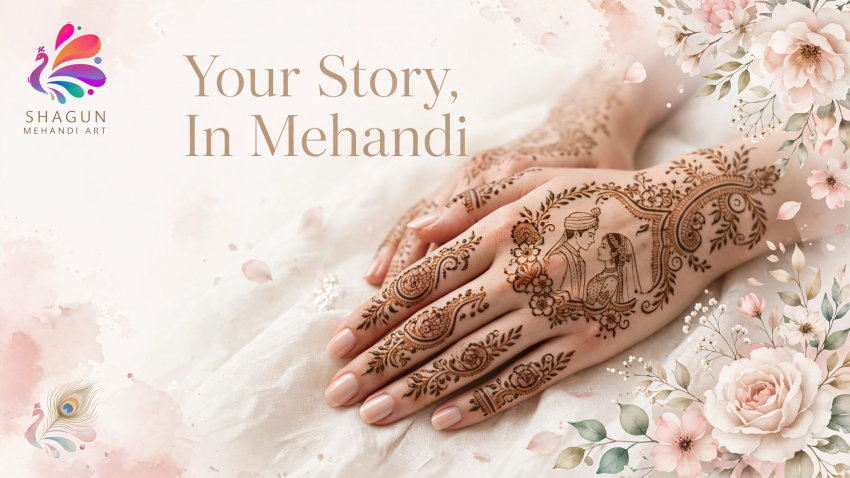
A wedding mehandi usually tells a story — but portrait mehandi makes it personal in a way nothing else can. Imagine seeing your own face — or the two of you from your engagement photos, or the moment he proposed — drawn in fine henna lines on your wedding day. Finding a skilled portrait mehandi artist has become one of the most searched-for bridal requests of 2026, and for good reason. It is about wearing your own love story on your skin, on the biggest day of your life.
Portrait mehandi was once rare, because few artists could genuinely do it well. As brides share their portrait work online, demand has exploded — and so has the gap between artists who can truly capture a face and those who merely claim to. This guide covers what portrait mehandi is, how the portraits are created, what separates excellent work from average, and what your consultation, trial, and wedding day will look like.
What Portrait Mehandi Actually Is
Portrait mehandi is bridal henna in which real faces or scenes are drawn freehand into the design — the couple, a childhood memory, the proposal, or family members the bride wants to carry with her. Instead of abstract florals and paisleys alone, parts of the design become small, detailed pictures, shaded and outlined in henna.
Portraits usually sit on the palms and outer arms, where there is enough flat space for a face to read clearly. A common arrangement: the couple’s portrait on one palm and a significant scene — the proposal, the ring exchange, the pheras — on the other. Some brides choose one large portrait framed by traditional bridal work; others prefer several small scenes scattered through the design like a storyboard.
What makes it the trend of 2026 is how personal brides have become about their mehandi. More brides now treat bridal mehandi as a commissioned piece of art about their own life, and portrait mehandi is the clearest expression of that shift. It takes real skill, real time, and an artist who thinks like an illustrator, not just a pattern-drawer.
How Couple and Wedding-Scene Portraits Are Created in Henna
The work starts before any cone touches your hand. A good artist studies your reference photographs — engagement pictures, candid shots, the proposal photo — and picks the expressions and angles that will translate best into henna. Three-quarter or straight-on faces work better than extreme profiles, because henna cannot hold pencil-sketch detail. The artist reduces a face to its most recognisable lines: the eyes, the smile, the hairline, the features that make two people instantly identifiable.
On the day, the portrait is drawn freehand, directly onto the skin. There are no stencils in genuine portrait work — anyone promising portraits from a stamp is not doing portraits at all. Working from your photographs, the artist builds the face line by line: outline first, then shading with fine hatching and dot-work for the cheeks, nose, and jaw. Bridal elements — the groom’s sherwani details, the bride’s jewellery, floral frames — are woven around it, so the picture sits inside a complete bridal design.
This is slow, careful work. A single well-done couple portrait can take an hour or more before the rest of the design even begins, and one wrong line across a face shows far more than one wrong line in a paisley. That is why portrait mehandi demands more time and attention than standard bridal mehandi — and why choosing the right artist matters so much.
What Sets a Great Portrait Mehandi Artist Apart
The difference between a decent artist and a great portrait mehandi artist shows up in three places: likeness, consistency, and honesty. Likeness is the obvious one — do the faces actually look like the two of you? Ask for close-up photos of past portrait work, not filtered video clips, and zoom in. Check that the eyes are symmetrical, the shading gives the face dimension rather than flattening it, and the couple looks like real people, not generic figures.
Consistency matters because portraits are hard to repeat — one lucky piece in a portfolio means little next to a dozen mediocre ones. Look at several portraits, not just the showcase piece. And value honesty: a trustworthy artist will tell you if a photograph will not translate well into henna, or if the portrait you want needs more space and time than you have planned. An artist who agrees to everything without discussion is not being accommodating; they are being careless with your wedding mehandi.
For brides in Delhi NCR, booking an experienced portrait mehandi artist who works this way is the single biggest factor in how the final design turns out.
The Consultation and Trial: What Happens Before the Wedding
A portrait booking begins with a consultation, usually a few weeks before the wedding. You share your story — how you met, which photographs mean the most, whose faces you want included, any scenes like the proposal or the roka that belong in the design. Bring more photographs than you think you need; the artist will pick the ones with the clearest expressions and best angles. Candid shots where both of you are genuinely smiling almost always beat stiff posed photos.
The consultation is also where practical decisions get made: where the portraits will sit, how large they will be, what surrounds them, and how much total time the application will need. If you want portraits of parents or grandparents who are no longer with you — something many brides ask for — this is the moment to share those photographs too, so the artist has time to study older, sometimes grainier images.
For portraits, a trial is genuinely worth doing. You see the artist’s actual portrait style on your own skin — how the faces look at real size, whether you like the detail, whether it feels like you. If the expression, placement, or surrounding motifs need adjusting, the wedding day is far too late for those conversations. Insist the trial is done by the same portrait mehandi artist who will handle your wedding-day application. The trial is cheap insurance for the most personal mehandi you will ever wear.
Timelines, Sitting Time and Aftercare: What to Expect on the Day
Portrait bridal mehandi takes longer than standard work, so plan honestly. A full application with portraits typically needs five to seven hours, sometimes more for multi-scene designs. Book your mehandi a day or two before the wedding, not the night before — you need sleep and the artist needs unhurried time. Wear comfortable clothes with sleeves that roll up, eat beforehand, and keep water and snacks nearby.
During the application, the artist will work in long stretches of complete concentration on the portraits. Keep your hand still and resist checking your phone — movement is the enemy of fine portrait lines. Most artists show you the portraits once outline and shading are done, before the surrounding design begins. Speak up then if something looks off: a small correction during drawing is easy, but not after the design is finished.
Aftercare is the same as for any bridal mehandi, but it matters more here. Keep the paste on as long as possible — six to eight hours minimum, overnight if you can. Scrape it off rather than washing it, keep water off the design for the first day, and apply natural oil or balm to deepen the colour. The dense shading of the portraits often develops into the darkest, richest part of the design, and the stain keeps darkening over 24 to 48 hours — so mehandi done a day or two before the wedding looks its best on the day itself.
Frequently Asked Questions
Can any photograph be turned into a mehandi portrait?
Almost any clear photograph can work, but sharp, well-lit photos where the face is clearly visible give the best results. Blurry, dark, or very small images make likeness harder to achieve. Your artist will review your photos during the consultation and tell you honestly which ones will translate well into henna.
How far in advance should I book portrait mehandi?
Portraits need consultation time, photograph review, and often a trial, so booking four to six weeks before the wedding is sensible — earlier in peak wedding season. Last-minute bookings are possible but leave no room for a trial, which is the one part of the process you do not want to skip.
Will the portraits look like us, or like generic faces?
With a skilled artist working from good photographs, the portraits should be recognisable as the two of you — that is the entire point. This is why checking an artist’s past portrait work closely, and doing a trial, matters so much. Generic-looking faces are the sign of an artist not genuinely comfortable with portrait work.
Can I include portraits of family members, like my parents?
Yes, and many brides do — portraits of parents, grandparents, or loved ones who have passed away are among the most emotional requests artists receive. Older photographs can be grainier, so share them at the consultation to give the artist time to study them properly.
Does portrait mehandi cost more than regular bridal mehandi?
It takes significantly more time, concentration, and artistic skill than standard bridal work, so it is priced accordingly. How much more depends on the number of portraits, their size, and the complexity of the surrounding design — discuss this openly at the consultation so there are no surprises.
How long does portrait mehandi take to apply?
A full bridal set with portraits generally takes five to seven hours, with the portraits themselves demanding the most concentrated stretch of that time. Multi-scene or very large portraits can take longer. Your artist should give you a realistic estimate at the consultation based on exactly what you have planned.
Your mehandi is the one part of your wedding look made entirely for you, from scratch, on the day. Portrait mehandi takes that to its most personal conclusion — your faces, your story, your people, drawn into the design you wear as a bride. If this is the mehandi you have been imagining, talk to a specialist portrait mehandi artist early, bring the photographs that matter most, and give the process the time it deserves. To see portrait work and start your consultation, visit shagunmehandiarts.com and book Shagun Mehandi Arts — and wear a design that could only ever belong to you.